A people-finder PWA, fully designed.
Ready to be built.
A nine-letter brandable .com, an illustrated character mascot, and a complete strategic build plan for a credit-based skip-tracing application — engineered to launch.
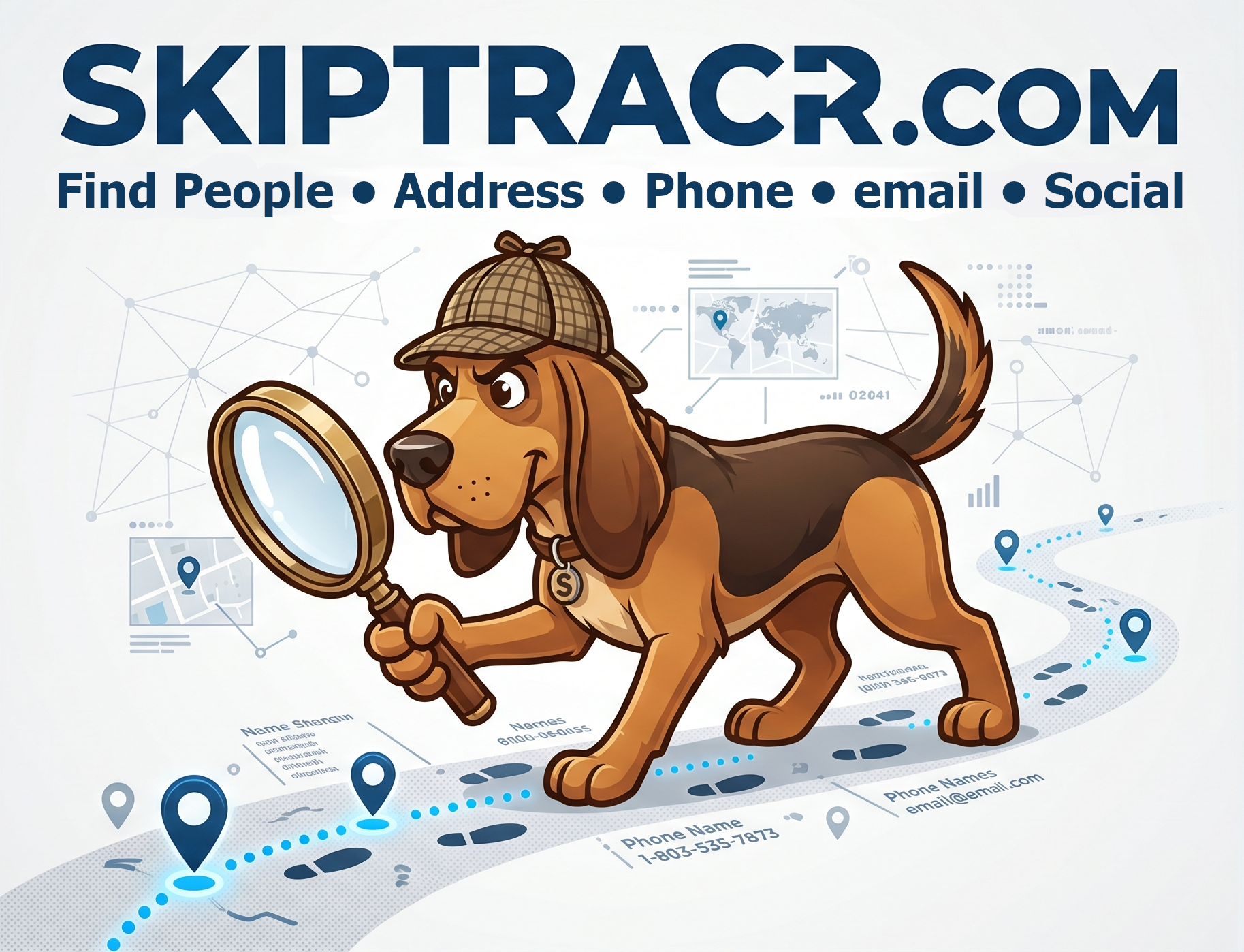
SkipTracr is built around a credit-based search architecture: free modules pull users in, paid modules monetize the deeper records. The product is fully specified — feature taxonomy, unit economics, tech stack, legal posture. Acquire it ready to ship.
Bloodhound mascot in a deerstalker hat. The animal of tracking. The hat of investigation. Memorable, extensible into marketing, social, in-app personality. Every competitor in this category — Spokeo, BeenVerified, TruthFinder, Whitepages — uses interchangeable corporate-blue iconography. SkipTracr stands out the moment it appears.
Eight-module taxonomy, free-vs-paid architecture, credit-pack pricing modeled against real API costs, payment processor recommendations for the high-risk category, BIPA / FCRA legal notes, separate-LLC structure, vendor lineup with per-query economics. Deliverables include the full strategic memo and architectural spec.
A buyer skips months of category research and launches with a clear plan.
"Skip tracer" is a generic descriptive term — unprotectable as a trademark by definition. SkipTracr is. The dropped-vowel stylization is the same naming convention behind some of the most valuable brand exits of the modern internet: Flickr, Tumblr, Grindr, Lyft, Imgur, Scribd. Each took a generic word, shaped it just enough to register, and walked away with a defensible mark plus a memorable name. The structure is what makes the registration work — and it conveys to the acquirer at closing.
Class 42 USPTO filing path documented in the strategy memo — buyer files at closing
Search returns a stack of result cards. The free cards pull from public data and open-source tools — they populate every search at zero cost. The paid cards unlock per-credit, weighted to actual API spend with a margin floor.
Federal NSOPW database plus state registry coverage. Zero cost to operator at small volumes.
Sherlock and Maigret integration sweeps 400+ social platforms by username permutation. Pure compute cost.
Aggregated newspaper obituaries, Find a Grave, Legacy.com cross-reference. Useful for genealogy and reconnection.
CourtListener / RECAP integration for federal lawsuit, judgment, and bankruptcy records.
Have I Been Pwned integration confirms whether the subject's emails or phones surfaced in known data breaches.
Phone numbers, current and prior addresses, known emails, relatives and known associates. The skip-trace workhorse module.
Generates and verifies likely email addresses against discovered employers and domains. Active when employer surfaces in any other module.
Real estate ownership records by name. Cheap upstream API; high perceived value for skip-trace and asset-discovery use cases.
Nationwide and county-level criminal databases, arrest warrants, court records. Highest-cost module; weighted accordingly.
Reverse image / facial recognition module. Architecturally specified but withheld from launch pending BIPA, GDPR, and processor compliance review.
Most consumer skip-trace products price below their API cost on full scans. The pricing model here is built around a 3× cost markup floor on each paid module, so margins hold up after high-risk processor fees, chargebacks, and reserve holds.
Gross margin per full scan: ~66%.
After high-risk processor fees (5.5% + $0.30) and reserve hold: ~58% contribution margin.
Refund-on-no-data is mandated at the API proxy layer to suppress chargeback rates and keep the processor relationship intact.
Subscription overlay ($19.99–$49.99/mo unlimited basic) modeled in the strategy memo as a Phase 3 introduction.
Architected to avoid the App Store and Google Play category restrictions on people-search. Distributed as a Progressive Web App; installable, push-capable, no platform gatekeeper. Stack is documented in the strategy memo with file structure, route handlers, and database schema.
Server-rendered marketing pages, client-side search shell, next-pwa for installability and service worker. Mobile-first.
Auth, credit ledger as append-only events, encrypted vendor key store, rate-limited proxy routes. No vendor key ever ships to the client.
Open-source OSINT engine deployed as a containerized worker. Streams 400+ platform results back via SSE. Zero per-query API cost.
Stripe is contraindicated for the category; processor recommendations and underwriting notes ship with the package. Refund-on-no-data wired into the proxy.
Marketing on Cloudflare for SEO bandwidth, app on Vercel, Maigret worker on Fly.io. Estimated $50–$120/mo at launch volumes.
FCRA-prohibited-use disclosures. Illinois and EU geofence design for the deferred face-search tab. Separate-LLC formation guidance.
The brand identity is intentionally flexible. The bloodhound and the SkipTracr wordmark can anchor either of these aesthetic directions — or anything in between. These mockups are illustrative, not final, and demonstrate the range available to the acquiring buyer.
Warm-dark editorial. Serif headlines, paper-grain texture, amber accents. Reads as legitimate research tooling. Friendlier to mainstream buyers, payment processors, and broader real-estate / journalist / self-lookup positioning.
Pure terminal aesthetic. Neon green, scan lines, monospace throughout. Reads as power-user OSINT tooling. Narrower market but stronger differentiation; appeals to PIs, security researchers, and OSINT-native audiences.
Same brand. Same domain. Same bloodhound. Two roads to market.
Or both — shipped concurrently as user-selectable themes inside the app, served to two markets at once.
A buyer takes ownership of a brand, a domain, an illustrated identity, and a strategic playbook. Months of category research, design work, and architectural planning compressed into a handoff.